
🍞 Homemade Soft Milk Bread Recipe
Introduction
Milk bread is one of the softest and fluffiest breads enjoyed worldwide. It is loved for its pillowy texture, golden-brown crust, and lightly sweet flavor. This bread pairs beautifully with butter, jam, honey, or can be used for sandwiches and French toast. Baking it at home allows you to experience the joy of fresh, warm bread straight from your oven.
Ingredients
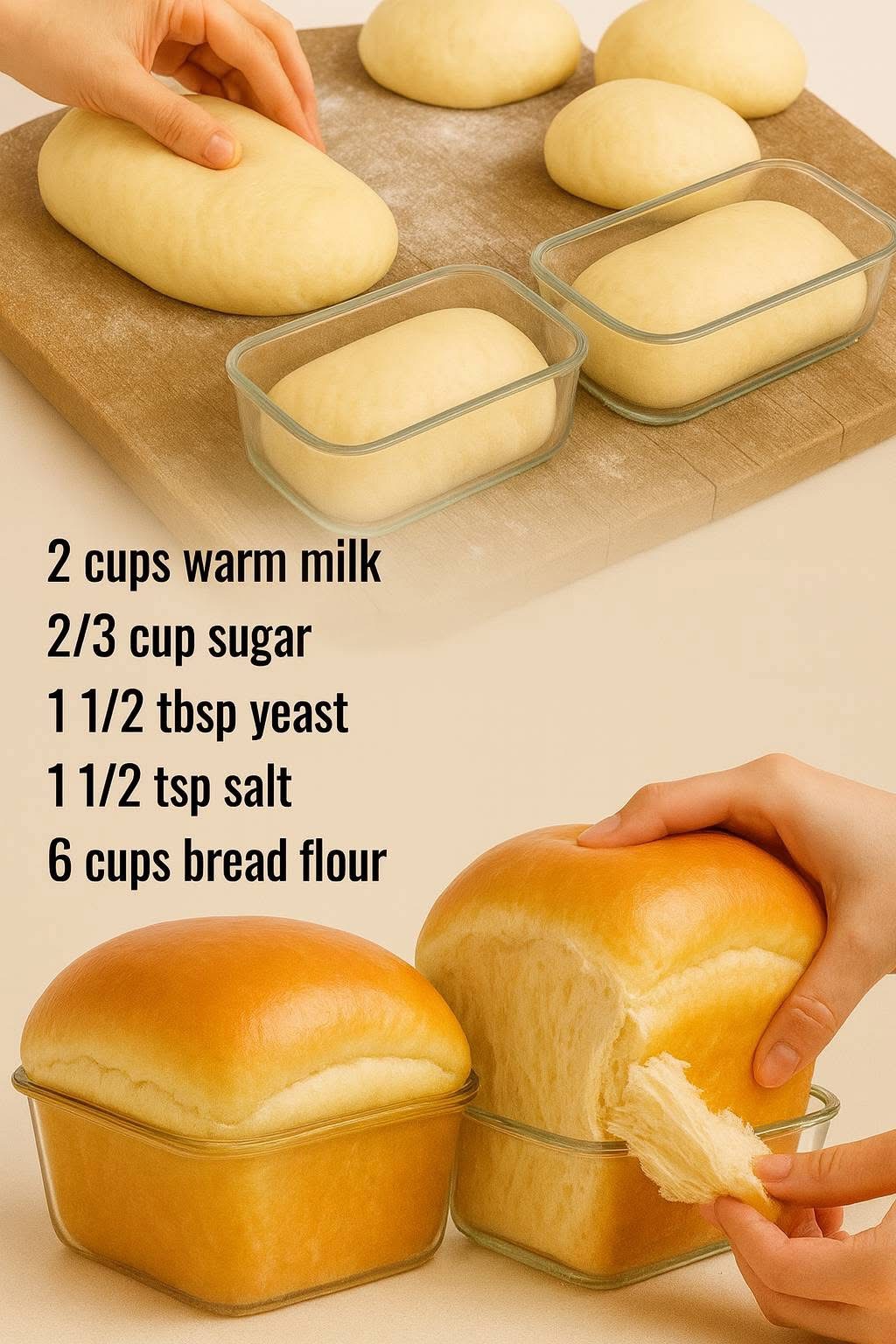
- 2 cups warm milk (around 110°F / 43°C)
- 2/3 cup sugar
- 1 ½ tbsp active dry yeast
- 1 ½ tsp salt
- 6 cups bread flour
(Optional: 4 tbsp butter for richer flavor, 1 egg yolk for shiny top glaze)
Instructions & Method
Step 1: Activate the Yeast
- Warm the milk until lukewarm (not hot).
- Mix in the sugar and yeast.
- Let sit for 8–10 minutes until foamy and bubbly (this shows the yeast is active).
Step 2: Make the Dough
- In a large bowl, combine bread flour and salt.
- Pour in the yeast mixture gradually while mixing.
- Knead the dough by hand for 10 minutes (or 6 minutes with a stand mixer) until smooth, elastic, and slightly tacky.
Step 3: First Rise
- Place dough in a greased bowl, cover with a clean cloth.
- Let it rise in a warm place for 1–2 hours until doubled in size.
Step 4: Shaping
- Punch down the dough to release air.
- Divide into equal portions and shape into smooth logs or balls.
- Place into greased loaf pans.
Step 5: Second Rise
- Cover again and let rise for 30–45 minutes until dough nearly doubles and reaches the pan’s edge.
Step 6: Baking
- Preheat oven to 350°F (175°C).
- Bake for 25–30 minutes until golden brown on top.
- Brush tops with melted butter (optional) for extra shine and softness.
Step 7: Cooling
- Allow bread to cool for at least 15 minutes before slicing.
History of Milk Bread
Milk bread, also known as “Hokkaido Milk Bread” in Japan, is inspired by Asian baking traditions where soft, fluffy bread became popular during the late 19th and early 20th century. European bread-making techniques blended with local ingredients like milk and sugar, creating the iconic sweet, cloud-like texture that is now loved globally.
Benefits
- Soft and Digestible: Easier on the stomach than dense breads.
- Rich in Protein & Calcium (from milk).
- Versatile: Great for breakfast, sandwiches, or desserts.
- Homemade Freshness: No preservatives, no additives.
Formation (Texture & Structure)
The combination of warm milk, sugar, and yeast ensures a tender, airy crumb. Kneading develops gluten, giving bread elasticity, while the rise creates fluffy air pockets. The result: a loaf that pulls apart in feathery strands.
Conclusion
Homemade milk bread is a rewarding recipe that combines simplicity with delightful results. It’s perfect for family gatherings, daily meals, or as a thoughtful gift for loved ones. Its soft texture and mild sweetness make it universally loved.
Lovers of This Bread
- Families: Kids love its pillowy texture.
- Bakers: Appreciate the artistry in its formation.
- Food Lovers: Enjoy it fresh, toasted, or with spreads.
- Health-conscious eaters: Prefer homemade over store-bought bread.